The Container
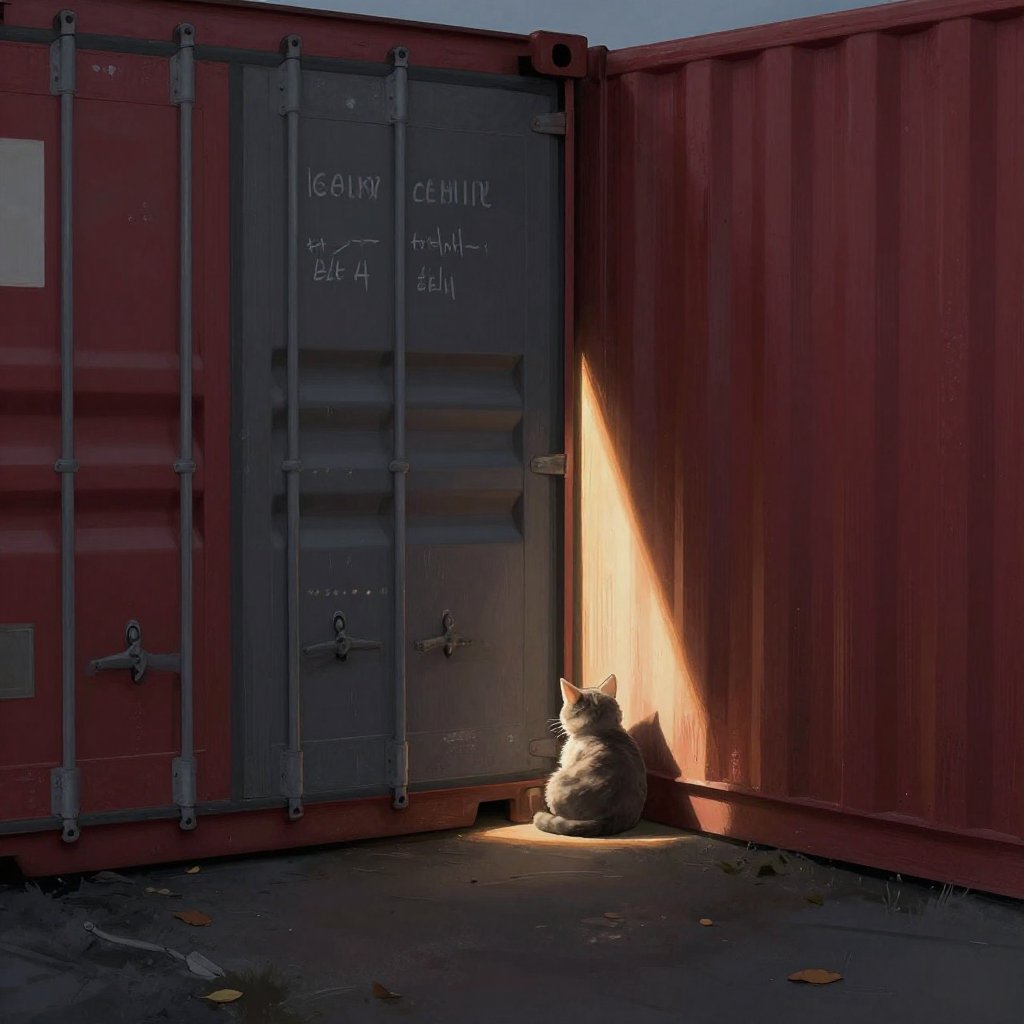
Somewhere in China, a shipping container was loaded and sealed. Inside: goods, boxes, the contents of ordinary commerce moving across the world. And somewhere in the dark among all of it, a small cat.
She had no name yet. She would get one later. For now, she was just a warm, frightened animal in a metal box, and the ocean was ahead of her.
Three Weeks of Dark
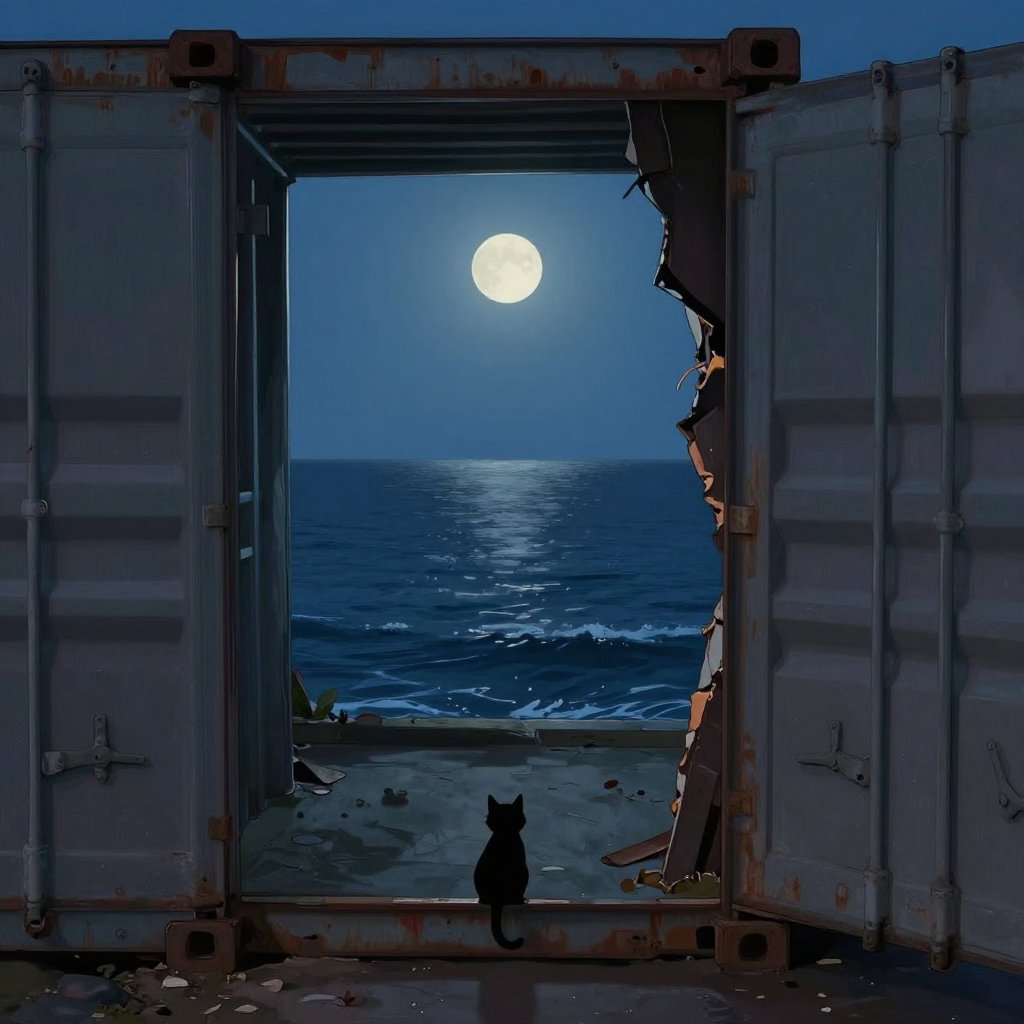
The journey from China to the United States by container ship takes approximately three weeks. The container holds no light. The temperature shifts with the weather. The sound of the ocean is everywhere and constant.
The cat could not know where she was going. She could not know that the rocking would stop, that the dark would end, that people on the other side of the world would be glad she made it. She just had to get through it.
Oakdale, Minnesota
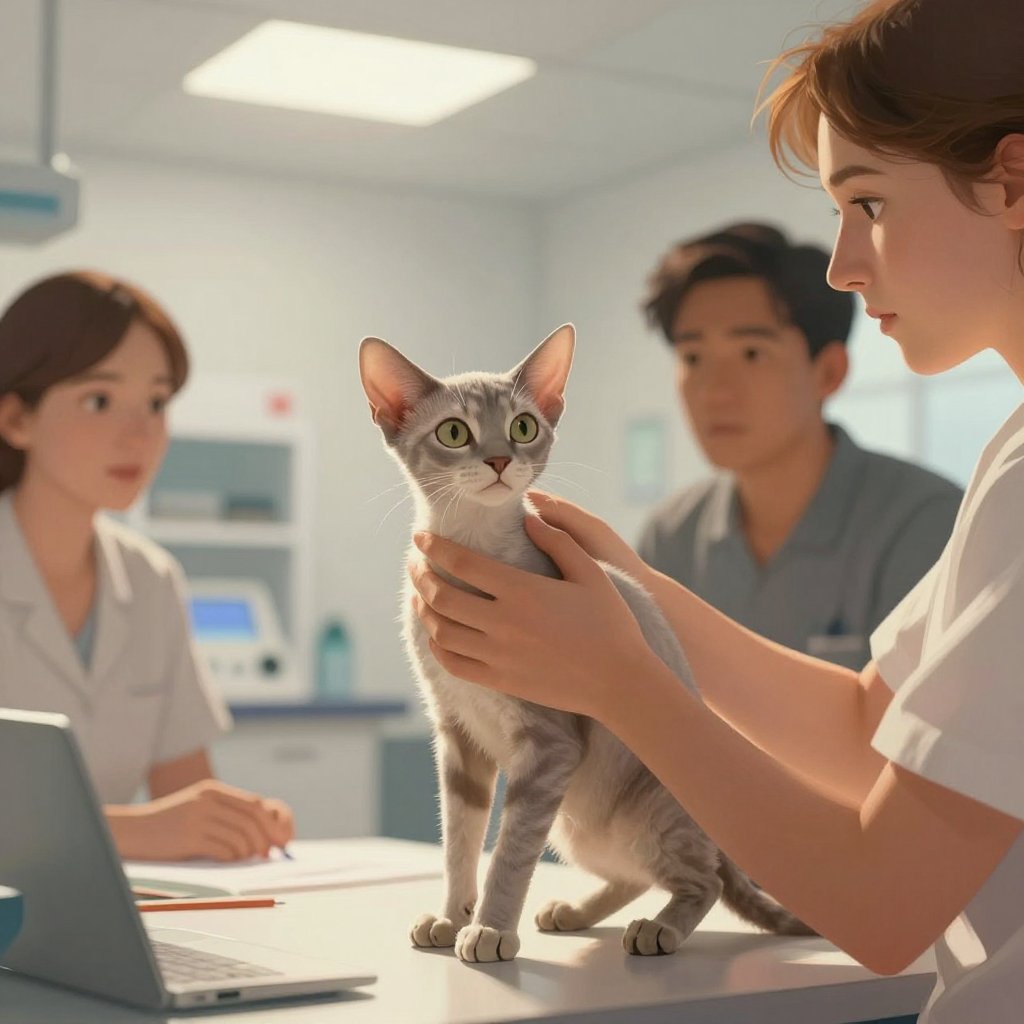
In June 2025, the container was opened at a facility in Oakdale, Minnesota. Someone heard something, or saw something, or the cat simply walked out. She was deathly thin. Her body had used everything it had just to survive the crossing.
She weighed almost nothing. She could barely hold herself up. She needed immediate care, and she got it.
Her Name

They named her Xiao Mao. In Mandarin Chinese, it means "little cat." It seemed right for someone who had traveled so far and arrived so small.
She spent weeks recovering. She ate carefully and then more. She watched the humans around her with the specific wariness of an animal who had been through something and was not yet sure whether trust was safe. She slept a great deal. Her body had a lot of work to do.
Learning Minnesota
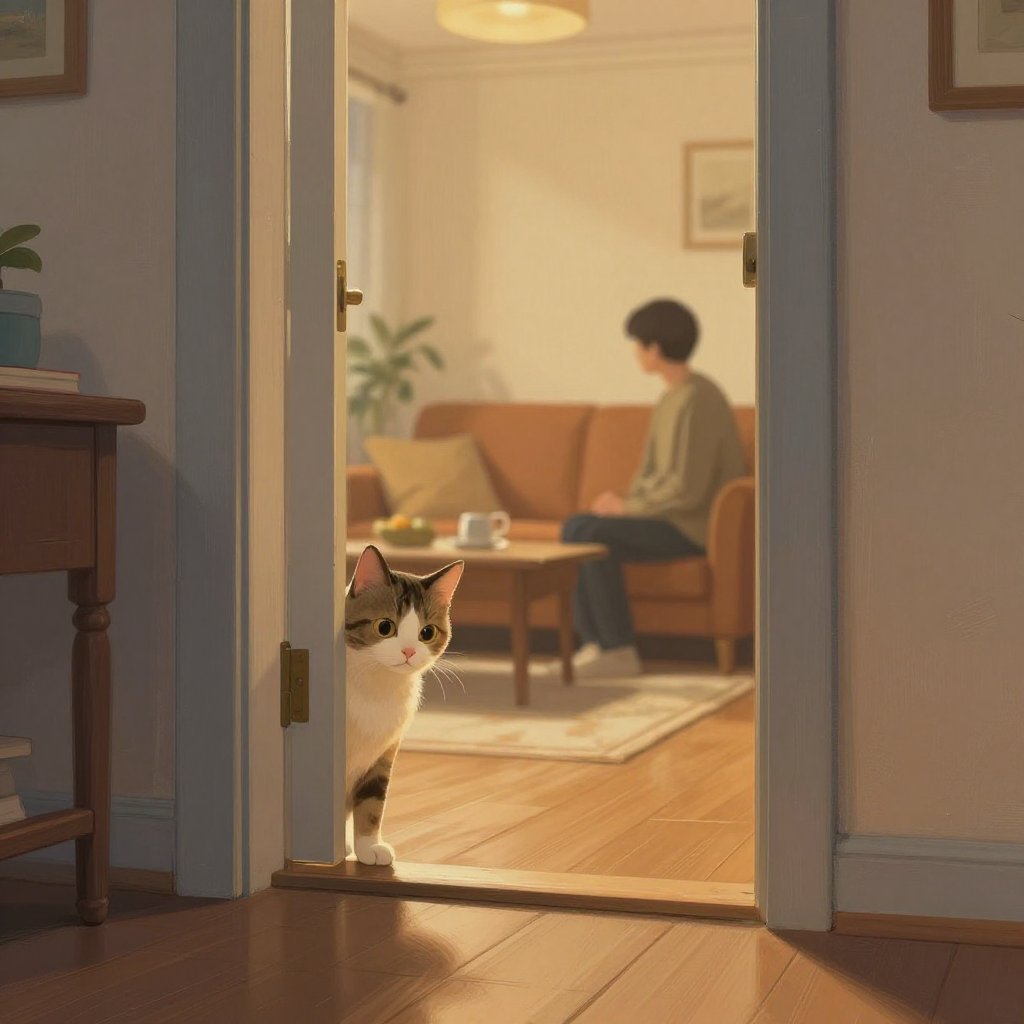
Adjustment took time. The sounds of a house were different from the sounds of the ocean. The smells were different. The light was different. Xiao Mao had only ever known China and the dark of the container, and Minnesota was a third thing entirely.
She explored on her own schedule. She observed. She came out when she felt like it and retreated when she didn't. Nobody rushed her. This was the most important thing: nobody rushed her.
The Chirp

A couple of months after she arrived, something changed. When the people she lived with called her name, she answered. Not a yowl or a meow. A chirp. Small and quick, the particular sound some cats make when they feel safe enough to speak.
Xiao Mao. Little cat. 8,000 miles and three weeks in the dark and a slow, careful return to the world. She chirped when called, and that was everything.
Field Notes
- "Xiao Mao" means "little cat" in Mandarin Chinese.
- Xiao Mao survived approximately a three-week voyage inside a sealed shipping container traveling roughly 8,000 miles from China to the United States.
- She was found in Oakdale, Minnesota in June 2025, deathly thin and severely ill from the journey.
- It took her a couple of months to adjust to life in the United States, during which she was cautious and reclusive.
- Over time, Xiao Mao began to come out when called and developed the habit of chirping in response to her name, a sign of trust and contentment in cats.
Support Second Chance Rescue MN
Second Chance Rescue MN is a nonprofit rescue organization in Minnesota dedicated to saving the lives of animals in need and finding them loving permanent homes.
Support Second Chance Rescue MN